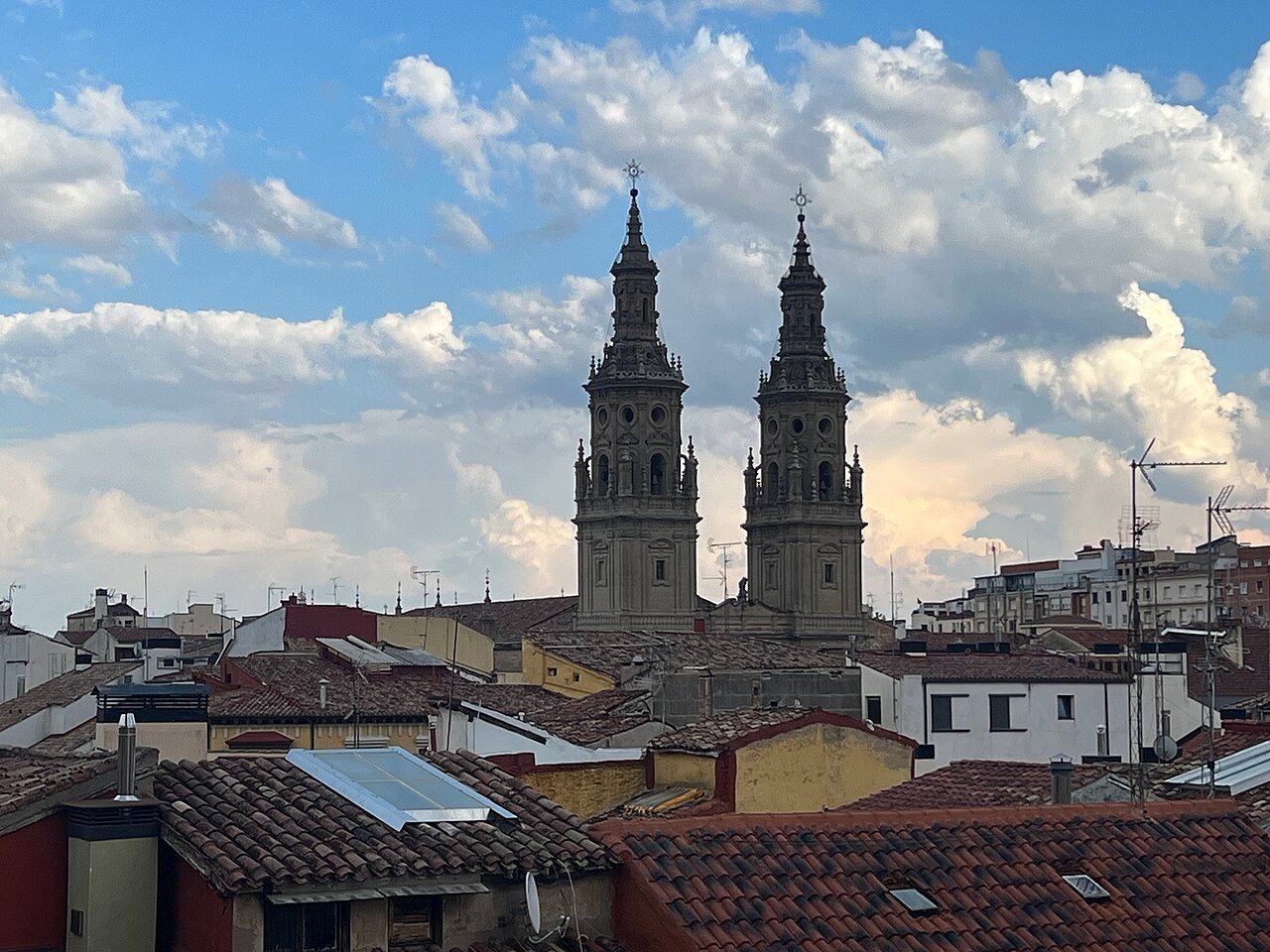
Logroño
No ratings yet
The capital of La Rioja, famous for its tapas, Calle del Laurel and the Way of St James.
These are the 15 places you cannot miss if you travel to La Rioja. Save your favourites and open them in Google Maps to plan your route.
There are no places with those filters.
The capital of La Rioja, famous for its tapas, Calle del Laurel and the Way of St James.
The region is famous for its wine, and its wineries offer tours and tastings to learn how it is made.
A World Heritage monastery, the cradle of the Spanish language, with a rich historic legacy.
A beautiful mountain range, ideal for hiking and enjoying nature.
A megalithic passage grave from the third millennium BC, restored and signposted, in the Sierra de Cameros about 2 km from Trevijano. Its excavation yielded gold pieces now kept in the Museum of La Rioja.
A town on the Way of St James whose cathedral keeps a live henhouse in memory of the miracle of the hen.
A mountain village at the foot of the Sierra de la Demanda, with arcades, a textile tradition and a ski resort nearby.
One of the most important dinosaur track sites in Europe, with trails among footprints and life-size dinosaur replicas.
One of the most beautiful villages in Spain, on a hill among vineyards, with the Vivanco Museum of Wine Culture.
Monastery founded in 1052 that holds the royal pantheon of the kings of Navarre, a Gothic-Plateresque cloister and fifteenth-century choir stalls.
Village in the Cidacos valley with free riverside hot pools, where the water emerges at over 50 degrees, and a colony of griffon vultures.
Remains of a castle on a crag about 17 km from Logroño, with views over the whole Ebro valley. According to legend, the battle of Clavijo was fought nearby, during which the apostle Saint James is said to have appeared.
Village surrounded by vineyards and crowned by a castle and the church of Santa María la Mayor, overlooking the Ebro. It is known for the Picaos, the penitents who take part in its Holy Week processions.
Benedictine monastery in a wooded valley of the Sierra de la Demanda where the Virgin of Valvanera, patron saint of La Rioja, is venerated. It has a guesthouse and trails through the surrounding beech woods.
One of the oldest towns in Spain, the Roman Calagurris, with a cathedral and a Jewish quarter. It is the capital of Rioja vegetables and holds a food festival every spring.
La Rioja is much more than wine: besides visiting wineries, you can explore the monasteries of San Millán de la Cogolla, the cradle of written Spanish and a World Heritage Site, Santo Domingo de la Calzada on the Camino de Santiago or the dinosaur footprints of Enciso. Logroño and its Calle Laurel are a must for tapas.
On the first day, Logroño and a winery visit; on the second, San Millán de la Cogolla, Santo Domingo de la Calzada and Ezcaray.
September and October, during the grape harvest, when the vineyards change colour; Logroño also celebrates the San Mateo festival in September.
Ezcaray, Briones, Santo Domingo de la Calzada, San Vicente de la Sonsierra, Haro and Nájera.


