Roman Theatre of Mérida
Badajoz
No ratings yet
An impressive theatre from the 1st century BC, one of the best-preserved Roman monuments in Spain.
These are the 21 places you cannot miss if you travel to Extremadura. Save your favourites and open them in Google Maps to plan your route.
There are no places with those filters.
Badajoz
An impressive theatre from the 1st century BC, one of the best-preserved Roman monuments in Spain.
Cáceres
A World Heritage historic quarter with medieval, Renaissance and Moorish architecture.
Cáceres
An important Gothic-Mudéjar monastery, also a World Heritage Site, with a rich religious and artistic history.
Cáceres
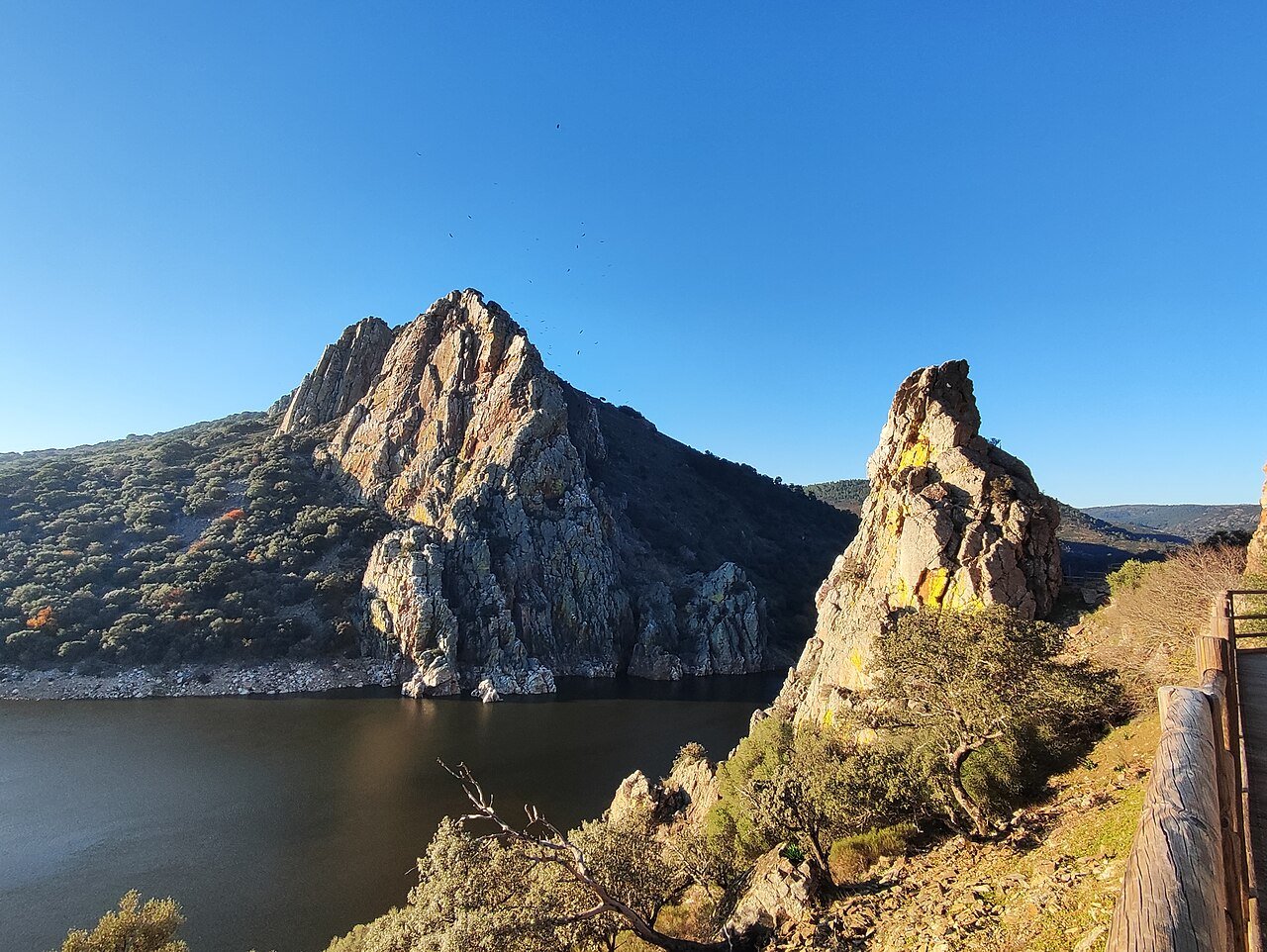
A natural paradise for hiking and birdwatching, especially vultures and eagles.
Badajoz
A colourful historic square with arches and old buildings, a meeting point in the city of Badajoz.
Cáceres
A town of conquistadors with a large arcaded main square, Renaissance palaces and an Arab castle on top.
Cáceres
A valley famous for its cherry blossom in spring, with gorges and natural pools for a summer swim.
Cáceres
A 2nd-century Roman bridge over the Tagus river, one of the best preserved in the world and almost 50 metres high.
Cáceres
A monumental city in northern Cáceres with two joined cathedrals, city walls and a lively main square.
Cáceres
A village in the Ambroz Valley with one of the best-preserved Jewish quarters in Spain, with narrow streets and adobe and timber houses.
Badajoz
One of the largest Moorish citadels in Europe, with the Espantaperros tower and views over the river Guadiana.
Badajoz
Building by Rafael Moneo in Mérida, with brick arches evoking Roman architecture and a superb collection of mosaics and sculpture.
Badajoz
Town nicknamed little Seville, with the Dukes of Feria's fortress, now a parador, and the arcaded Plaza Grande and Plaza Chica.
Cáceres
Hieronymite monastery in La Vera where Emperor Charles V spent his final years and died in 1558, surrounded by oak and chestnut woods.
Cáceres
Landscape of granite boulders and ponds with stork colonies in Malpartida de Cáceres, also home to the Vostell Museum.
Badajoz
Monumental town of Templar origin with a thirteenth-century castle and slender Baroque towers visible from afar. It is the birthplace of Vasco Núñez de Balboa, the first European to sight the Pacific Ocean.
Badajoz
Border town that was Portuguese until 1801 and keeps that heritage in its streets, its castle with a large keep and the church of Santa María Magdalena, built in the Manueline style.
Badajoz
Monumental town in the Campiña Sur with an arcaded main square and the church of Nuestra Señora de la Granada, with its Baroque tower. It was the seat of an Inquisition court and of the priory of the Order of Santiago.
Badajoz
Birthplace of Hernán Cortés, with a castle on top of the hill and a Roman theatre cut into the hillside, beside a stone bridge over the Guadiana.
Cáceres
Town on the river Alagón with an almost complete wall of Roman origin, a Gothic cathedral and a castle. Its San Juan festival is one of the most popular in Extremadura.
Cáceres
Walled medieval village that was evacuated in the 1960s when the Gabriel y Galán reservoir was built. Today you can stroll its restored streets, its walls and its castle, surrounded by water.
Discover the villages, monuments and natural areas within 150 km for a day trip or a weekend getaway.
Getaways from CáceresExtremadura surprises with its Roman and medieval heritage: the Roman Theatre of Mérida, the Old Town of Cáceres, Trujillo, the Monastery of Guadalupe and the Alcántara Bridge. Its natural highlights are Monfragüe National Park, a paradise for birds of prey, and the Jerte Valley.
Cáceres and Trujillo, less than an hour apart, fill two busy days; if you prefer Roman history, spend one of them in Mérida.
Spring: between late March and April the cherry trees of the Jerte Valley blossom and the countryside is green. Summer is very hot, although the Mérida Classical Theatre Festival takes place in July and August.
Trujillo, Hervás, Plasencia, Guadalupe, Zafra and Jerez de los Caballeros.